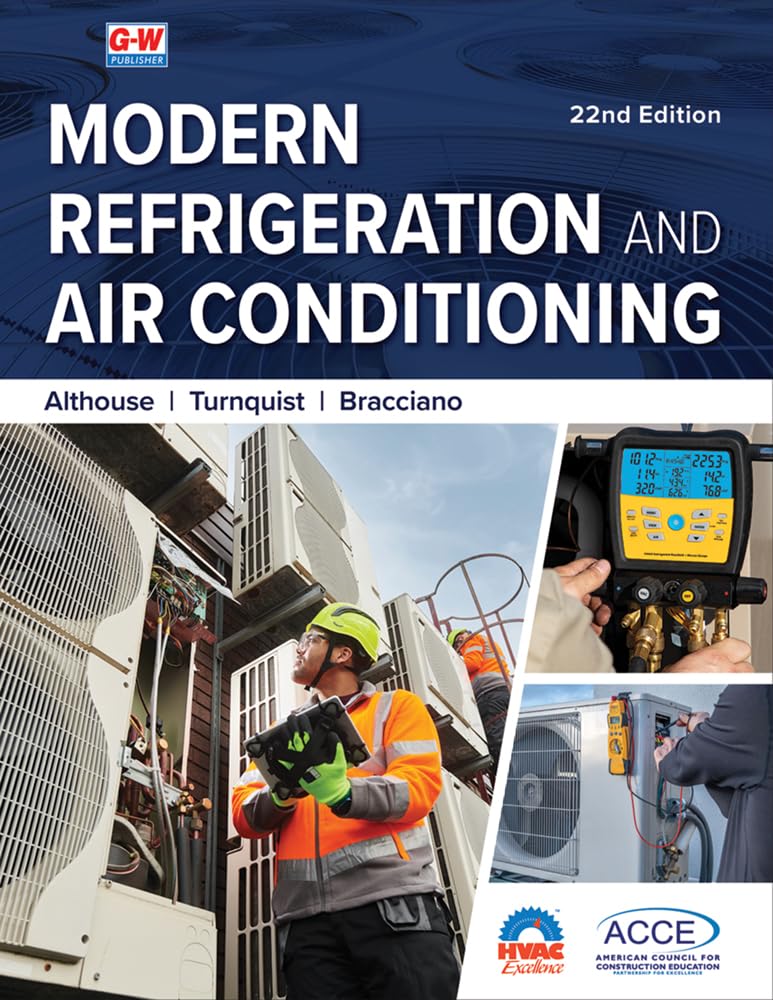
Modern Refrigeration and Air Conditioning is widely regarded as one of the most authoritative textbooks in the HVAC and refrigeration industry.
Used by students, technicians, and engineers around the world, this book has become a cornerstone for understanding how modern cooling systems are designed, installed, operated, and maintained. Whether you’re entering the HVAC field or sharpening your professional expertise, this book offers a solid foundation backed by real-world applications.
What makes this title stand out is its balance between theory and practice. It doesn’t just explain what refrigeration systems are—it shows how they work in real environments. In this review, you’ll find a clear summary, key takeaways, pros and cons, and where to buy the book online. Keep reading to see if this HVAC classic is right for you.
Table of Contents
About the Book
Modern Refrigeration and Air Conditioning falls under the technical education and engineering genre, with a strong focus on HVACR (Heating, Ventilation, Air Conditioning, and Refrigeration). The book is designed as both a textbook and a long-term reference guide.
It covers a wide range of topics, including:
- Basic refrigeration principles
- Air conditioning systems and components
- Electrical controls and motors
- Installation, servicing, and troubleshooting
- Energy efficiency and safety practices
The book is primarily targeted at HVAC students, refrigeration technicians, mechanical engineers, and facility managers. It is commonly used in trade schools, polytechnic institutes, and engineering programs. Updated editions reflect modern standards, refrigerants, and industry regulations, making it relevant even as technology evolves.
About the Author
The book is authored by Andrew D. Althouse, Carl H. Turnquist, and Alfred F. Bracciano, all of whom are respected names in HVAC education. Their combined experience spans decades in technical training, curriculum development, and industry consulting.
These authors are known for translating complex engineering concepts into clear, teachable material. Their other educational works are widely used in vocational and technical programs, reinforcing their credibility as subject-matter experts. This depth of experience is one reason Modern Refrigeration and Air Conditioning continues to be trusted globally.
Summary / Key Takeaways
Here are the core lessons and highlights readers take away from the book:
- Explains fundamental refrigeration cycles in a simple, step-by-step manner
- Breaks down air conditioning systems, from window units to large commercial setups
- Covers electrical theory and controls essential for HVAC technicians
- Emphasizes safety procedures and best practices in installation and servicing
- Includes diagrams and illustrations that improve practical understanding
The book avoids unnecessary fluff and focuses on building solid technical competence.
What Readers Liked
Readers consistently praise this book for several reasons:
- Clear explanations of complex HVAC concepts
- Strong mix of theory and hands-on application
- Detailed illustrations and system diagrams
- Useful as both a learning textbook and a field reference
- Trusted resource for exam preparation and certifications
Many professionals mention that it’s a book they return to repeatedly throughout their careers.
What Could Be Better
While highly regarded, a few minor limitations are worth noting:
- Some sections may feel too technical for complete beginners
- The book’s textbook-style layout may not appeal to casual readers
- Certain editions are quite large and not very portable
These are small trade-offs considering the depth and reliability of the content.
Why You Should Read It
If you’re serious about refrigeration or air conditioning, this book is hard to beat. It provides a structured learning path, starting from basics and progressing to advanced systems. Unlike quick online guides, it builds long-term understanding rather than surface-level knowledge.
For students, it’s an excellent academic companion. For working technicians, it acts as a problem-solving manual. And for engineers or facility managers, it offers valuable insight into system design and efficiency.
Buy This Book
If you want a trusted HVAC reference used worldwide, this book is a smart investment.

About the Author