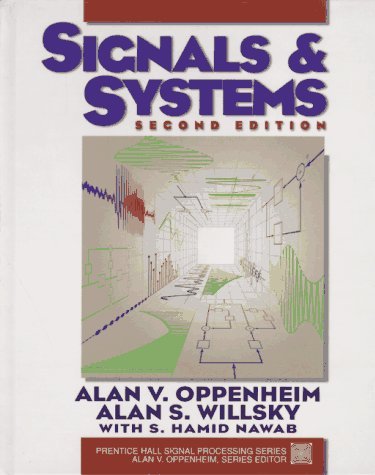
Control systems are everywhere—from aircraft autopilots and robotics to power plants and industrial automation. Modern Control Engineering is one of the most widely respected textbooks in this field, helping generations of engineers understand how complex dynamic systems can be modeled, analyzed, and controlled effectively. Written by Katsuhiko Ogata, this book is often considered a gold standard for students and professionals alike.

Praised for its clear explanations and practical problem-solving approach, the book bridges theory and real-world engineering applications. Whether you are a student preparing for exams or a practicing engineer refreshing core concepts, this review will help you decide if it’s right for you. Keep reading for a clear summary, key takeaways, and buying details.
Table of Contents
About the Book
Modern Control Engineering falls under the engineering and technical education genre, specifically focusing on control systems engineering. The book introduces both classical and modern control theory, making it suitable for undergraduate and postgraduate engineering students.
Key themes covered include system modeling, time-domain and frequency-domain analysis, stability concepts, root locus techniques, and state-space methods. Ogata emphasizes mathematical rigor while ensuring concepts are tied to practical engineering problems.
This book is primarily aimed at:
- Mechanical, electrical, and electronics engineering students
- Control system professionals and researchers
- Anyone preparing for competitive engineering exams
First published decades ago and updated through multiple editions, it remains a standard textbook in universities worldwide due to its structured explanations and solved examples.
About the Author
Katsuhiko Ogata was a highly respected professor of mechanical engineering and a leading authority in control systems. He taught at the University of Minnesota and authored several influential engineering textbooks.
Some of his other well-known works include Discrete-Time Control Systems and System Dynamics. Ogata’s writing is known for its clarity, logical progression, and strong emphasis on fundamentals, making complex topics easier to grasp. His academic credibility and industry relevance have made his books long-standing references in engineering education.
Summary / Key Takeaways
Here are the core ideas and lessons readers gain from Modern Control Engineering:
- Explains mathematical modeling of physical systems using differential equations and transfer functions
- Covers time-domain analysis including transient and steady-state response
- Introduces frequency-domain techniques such as Bode plots and Nyquist stability
- Provides a solid foundation in root locus and controller design
- Explains state-space analysis for modern control systems
- Includes numerous worked examples and end-of-chapter problems
The book focuses on understanding concepts deeply rather than memorizing formulas.
What Readers Liked
Readers consistently praise this book for several reasons:
- Clear and structured explanations of complex control concepts
- Strong balance between theory and practical applications
- Abundant solved examples that reinforce learning
- Logical chapter progression suitable for self-study
- Long-standing reputation as a trusted academic textbook
Many students mention that this book helped them finally “connect the dots” in control systems.
What Could Be Better
While highly regarded, some readers point out a few limitations:
- The mathematical depth may feel challenging for beginners
- Limited coverage of modern software tools like MATLAB simulations
- Writing style is academic, not conversational
These are minor concerns and don’t significantly reduce the book’s overall value.
Why You Should Read It
If you are serious about mastering control systems, Modern Control Engineering is hard to beat. It provides a rock-solid foundation that supports advanced topics like robotics, automation, and aerospace control.
This book is especially valuable if you:
- Are preparing for university exams or GATE-level tests
- Want a long-term reference you can revisit throughout your career
- Prefer learning concepts with mathematical clarity and discipline
Buy This Book
If you’re ready to build strong fundamentals in control systems, this book is a worthwhile investment.

About the Author