Control Systems Engineering is one of those rare engineering textbooks that has managed to stay relevant for decades while continuously evolving with modern technology. Widely used in universities and referenced by practicing engineers, this book is considered a core resource for understanding feedback systems, modeling, and control design.
Whether you’re an undergraduate student trying to grasp fundamentals or a working professional brushing up on concepts, this book aims to bridge theory with real-world applications.
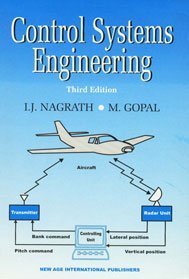
What makes Control Systems Engineering especially popular is its structured approach—starting from the basics and gradually moving toward advanced control techniques without overwhelming the reader. In this review, you’ll find a clear summary, key takeaways, pros and cons, and buying details to help you decide if this classic deserves a place on your shelf.
Table of Contents
About the Book
Control Systems Engineering is a technical engineering textbook focused on the analysis and design of control systems. It primarily covers feedback control theory, system modeling, stability analysis, time-domain and frequency-domain methods, and modern control techniques.
The book is widely adopted in mechanical, electrical, electronics, and instrumentation engineering programs. It balances mathematical rigor with practical examples, making it suitable for both academic study and professional reference.
Key highlights include:
- Emphasis on real-world engineering applications
- Clear explanations supported by diagrams and worked examples
- End-of-chapter problems for self-assessment
- Coverage of both classical and modern control theory
Typically published in multiple editions, the book has been updated over the years to include MATLAB-based examples and modern design approaches, keeping it aligned with industry standards.
About the Author
The most widely used version of Control Systems Engineering is written by Norman S. Nise, a respected academic and educator in control systems. He is known for his ability to explain complex engineering concepts in a clear, student-friendly manner.
Norman S. Nise has taught control systems for many years and has authored several well-regarded engineering texts. His teaching-focused writing style is one of the main reasons this book is so popular in classrooms worldwide.
Summary / Key Takeaways
Here are the core concepts readers gain from Control Systems Engineering:
- Fundamentals of feedback and open-loop control systems
- Mathematical modeling of mechanical, electrical, and electromechanical systems
- Time-domain analysis including transient and steady-state response
- Frequency-domain techniques such as Bode plots and Nyquist criteria
- Stability analysis using root locus methods
- Introduction to modern and digital control systems
The book builds knowledge progressively, making it easier to connect theory with practical design problems.
What Readers Liked
Readers and students consistently praise Control Systems Engineering for several reasons:
- Clear and structured explanations that make tough topics manageable
- Strong focus on engineering intuition, not just equations
- Plenty of worked examples and illustrations
- Well-designed chapter summaries and practice problems
- Useful for both exam preparation and real-world applications
Many readers note that it’s one of the few textbooks they actually return to even after completing their course.
What Could Be Better
While highly regarded, the book isn’t perfect. Some readers point out a few minor drawbacks:
- Mathematical sections may feel challenging for absolute beginners
- Some editions are text-heavy with limited color visuals
- Advanced readers may want deeper coverage of modern control topics
These are relatively small issues and largely depend on the reader’s background.
Why You Should Read It
If you are studying or working in any engineering field that involves automation, robotics, HVAC systems, process control, or instrumentation, this book is extremely valuable.
You should read Control Systems Engineering if you want to:
- Build a strong foundation in control theory
- Understand how theory translates into practical system design
- Prepare confidently for university exams or competitive tests
- Strengthen skills relevant to industry and research
Buy This Book
Ready to add this essential engineering classic to your library?

About the Author