Introduction
Quality and safety management directly addresses these risks, preventing rework that correlates with higher OSHA injury rates and costing the industry $11.5 billion annually in injuries.

Poor quality leads to structural failures, delays, and legal liabilities, while robust systems ensure compliance, reduce costs by $4-$6 per $1 invested in safety, and deliver durable projects. This 2026 masterclass equips project managers, engineers, and teams with actionable strategies, checklists, formulas, and tools to implement
construction quality and safety management effectively. Readers gain step-by-step processes, real-world case studies, and data-backed insights to achieve zero-harm sites and on-budget delivery.
Table of Contents
Why Quality & Safety Matter
Falls alone caused 421 construction deaths in 2023, underscoring how quality failures like inadequate shoring or substandard concrete amplify hazards. Beyond human toll, injuries force 130,000+ workers to miss days, disrupting timelines and inflating costs to $27,000 per case—double the all-industry average. Quality lapses trigger rework, with studies linking higher defect rates to elevated accident risks, as rushed fixes create unsafe conditions.
Effective construction quality and safety management yields measurable ROI: firms investing in protocols see 20-30% fewer incidents and faster project completion. Regulations like OSHA standards mandate inspections and PPE, with non-compliance fines averaging $15,000 per violation. In 2025, rising labor shortages (projected 500,000 worker gap) make safety paramount to retain skilled talent and avoid insurance hikes up to 50% post-incident. Prioritizing these pillars protects lives, secures profitability, and builds client trust through defect-free deliverables.
Fundamental Concepts
Quality assurance (QA) focuses on processes to prevent defects, while quality control (QC) verifies outputs via inspections and testing. Safety management systems (SMS) integrate hazard identification, risk assessment, and controls like PPE and fall protection. Core principles include Total Quality Management (TQM), emphasizing continuous improvement, stakeholder involvement, and zero defects.
Key terms: Non-destructive testing (NDT) like ultrasonic flaw detection preserves integrity; Punching shear failure occurs when slabs lack sufficient thickness, as in code violations. Risk interdependence—where design errors cascade to construction flaws—demands holistic approaches. Standards such as ISO 9001 for QA and OSHA 1926 for safety form the backbone.
Practical Methodologies
Quality Control Techniques
Visual inspections catch 70% of defects like misalignment or surface flaws; pair with NDT methods: ultrasonic for welds, thermography for moisture. Implement Quality Control Plans (QCP) outlining specs, testing frequencies, and corrective actions.
Step-by-Step QC Process:
- Review drawings and specs pre-work.
- Conduct material verification (certificates, tests).
- Perform phased inspections (foundation, framing).
- Document deficiencies with photos and assign fixes.
- Final walkthrough and sign-off.
Safety Management Systems
Adopt SMS with daily hazard hunts, toolbox talks, and emergency drills. Fall protection checklist: Guardrails at 6ft heights, harnesses for leading edges, training records.
Construction Site Safety Checklist:
- PPE: Helmets, gloves, vests (100% compliance).
- Housekeeping: Clear walkways, secure materials.
- Equipment: Daily inspections, lockout/tagout.
- Emergency: First-aid kits, evacuation maps.
Risk Assessment Protocol
Score risks using Risk Score=Likelihood×Impact (1-5 scale). Plot on 5×5 matrix; prioritize scores >15.
Advanced Applications
Lean Construction minimizes waste through just-in-time delivery and value stream mapping, cutting defects by 25%. Integrate BIM for 4D simulations predicting clashes and safety gaps. Sustainability ties in: Use low-VOC materials verified via air quality tests to meet LEED while ensuring worker health.
Predictive Analytics in 2026 leverages AI for incident forecasting based on weather, fatigue data. Integrated Management Systems combine QA, safety, environment per ISO standards, reducing audit times by 40%. Drone inspections access hard-to-reach areas, detecting 90% more issues than manual methods.
Tools & Software
Procore Safety Management unifies inspections, incident tracking, and PM workflows. HammerTech handles orientations, permits, analytics for multi-site compliance. SafetyCulture offers digital checklists with real-time reporting.
Common Mistakes & Solutions
- Skipping Site Surveys: Causes foundation failures. Solution: Conduct topo/soil tests pre-bid.
- Inadequate PPE Enforcement: Leads to 20% of injuries. Solution: Daily gear checks, training.
- Poor Documentation: Triggers disputes. Solution: Digital logs with timestamps.
- Rushed Shoring Removal: Collapse risk. Solution: Load testing per engineer specs.
- Ignoring Subcontractor Vetting: Quality gaps. Solution: Pre-qualify with safety records.
Case Study 1: Harbor Cay Collapse
In 1981, the five-story Harbor Cay Condominium in Florida collapsed during construction, killing 11 and injuring 23. Root causes: No punching shear calculations for 8-inch slabs (code required 11 inches), design errors, and inadequate oversight. Costs exceeded $10M in rework/liabilities; lesson—mandatory peer reviews prevent 80% of calc failures.
Case Study 2: Successful Safety Turnaround
A Texas firm faced OSHA complaints for fall violations. Response: Immediate audits, subcontractor training, digital tracking. Result: Zero incidents next year, 25% faster completion. Proves proactive SMS scales with growth.
Worked Examples with Calculations
Example 1: Risk Assessment
For crane ops: Likelihood=3 (occasional), Impact=5 (fatal).
Risk Score=3×5=15 (High—add spotters) .
Example 2: Cost-Benefit
Annual injuries cost $27k/case; 10 cases=$270k. Safety investment $50k yields $200k-$300k savings (4:1 ROI).
Formula: Savings=(Cases×27,000)×0.8−Investment = $166k net.
FAQ
1. What is the top construction safety hazard in 2025? Falls at 39.2% of fatalities; use guardrails/harnesses.
2. How to implement QC daily? Phased checklists, NDT, digital photos.
3. Best software for safety? Procore for integrations.
4. Calculate project risk? Likelihood × Impact matrix.
5. Common quality failure? Design errors; use BIM.
6. ROI on safety programs? $4-6 per $1 invested.
7. PPE checklist essentials? Helmets, vests, gloves—daily verify.
8. Advanced trend? AI predictive analytics.
Conclusion
Construction quality and safety management transforms high-risk sites into efficient operations, slashing fatalities (up 12-year high) and $11.5B injury costs through QA/QC, SMS, and tools like Procore. Key takeaways: Deploy checklists daily, score risks with Likelihood×Impact, audit subcontractors, and leverage BIM/NDT for zero defects. Case studies prove prevention averts disasters like Harbor Cay while yielding 25% gains. Your team cuts rework 30%, boosts ROI—start with a site audit today. Download free checklists at Famcod.com and elevate standards. [Internal: /construction-checklists] [Internal: /bim-guide].
Related Articles
- Critical Path Method (CPM) Guide for Construction 2026
- Dependency Types in Construction Scheduling (FS, SS, FF, SF) Explained: Complete Guide 2026
- Float Calculation Methods: Total Float vs Free Float in Construction Scheduling
- Schedule Compression Techniques in Construction: Crashing vs Fast-Tracking Explained
- Resource Allocation Strategies in Planning for Construction Projects
Recommended Resources
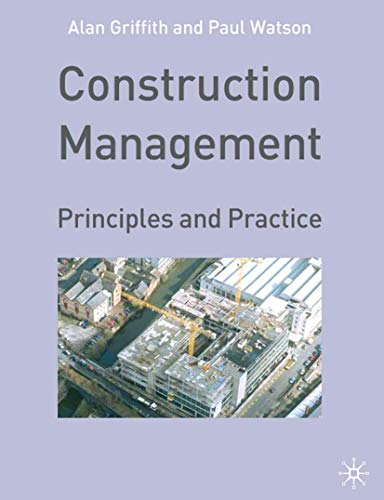

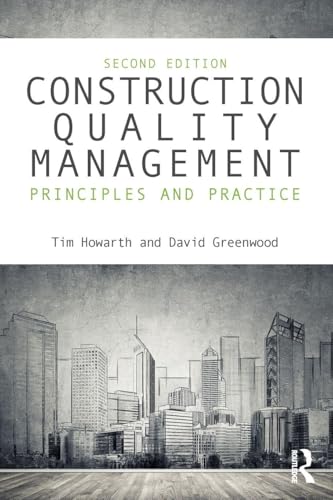

Free Resources: Download QC checklists and risk templates at Famcod.com/resources [Internal Link].
About the Author