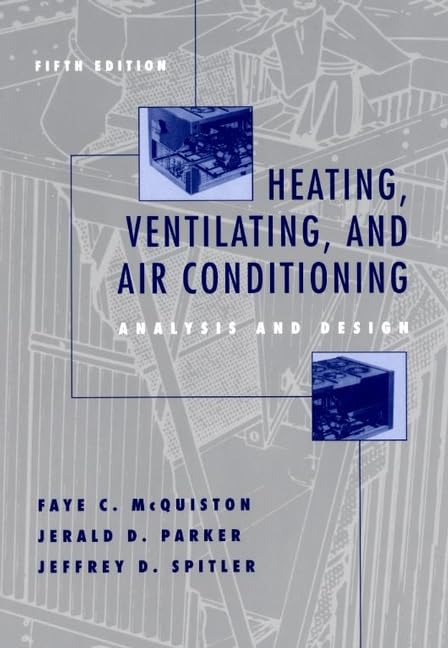
Heating, Ventilating, and Air Conditioning: Analysis and Design is one of those rare engineering textbooks that has achieved classic status. Widely used in universities, consulting firms, and by practicing HVAC engineers, this book is often considered a cornerstone reference for understanding HVAC system design from first principles. Written with a strong focus on engineering analysis, load calculations, and real-world applications, it bridges the gap between theory and practice exceptionally well.
Whether you are a mechanical engineering student, an HVAC designer, or a facilities professional looking to strengthen your technical foundation, this book promises depth, clarity, and long-term value. Keep reading for a clear summary, key takeaways, pros and cons, and where you can buy it online.
Table of Contents
About the Book
Heating, Ventilating, and Air Conditioning: Analysis and Design is a technical engineering textbook focused on the analysis, design, and performance of HVAC systems in buildings. The book systematically explains how heating and cooling loads are calculated, how air-conditioning systems are designed, and how comfort conditions are achieved efficiently.
Key themes covered include:
- Heat transfer and psychrometrics
- Cooling and heating load estimation
- HVAC system components and configurations
- Energy efficiency and system optimization
This book is primarily aimed at:
- Mechanical and HVAC engineering students
- HVAC design engineers and consultants
- Building services professionals and facility managers
First published decades ago and updated through multiple editions, it remains a trusted academic and professional reference in the HVAC industry.
About the Author
The book is authored by Jerald D. Parker, Jeffrey D. Spitler, and Faye C. McQuiston, all respected names in mechanical and HVAC engineering education.
- Faye C. McQuiston was a pioneer in HVAC education and research, known for simplifying complex thermal concepts.
- Jerald D. Parker and Jeffrey D. Spitler are well-known for their academic contributions and industry-relevant research in building energy systems.
Their combined expertise gives the book strong academic credibility while keeping it grounded in real engineering practice. The authors are also associated with several peer-reviewed papers and HVAC standards referenced worldwide.
Summary / Key Takeaways
Here are the core ideas and lessons readers gain from this book:
- Fundamental HVAC principles explained using clear engineering logic and equations
- Step-by-step methods for heating and cooling load calculations
- Practical use of psychrometrics in HVAC system design
- Detailed explanation of air-conditioning system types and components
- Strong emphasis on energy efficiency and performance evaluation
The book avoids unnecessary fluff and focuses on analytical understanding, making it ideal for serious learners.
What Readers Liked
Readers consistently appreciate this book for several reasons:
- Clear explanations of complex topics like heat transfer and psychrometric processes
- Strong balance between theory and practical HVAC design applications
- Widely accepted as a standard textbook in HVAC courses worldwide
- Excellent reference for professional engineers preparing designs or calculations
- Structured approach that builds understanding chapter by chapter
Many engineers keep this book on their desk long after graduation as a reliable reference.
What Could Be Better
While highly respected, the book has a few minor limitations:
- The content is mathematically intensive, which may challenge beginners
- Limited use of modern visuals compared to newer, more graphical textbooks
- Less focus on smart HVAC controls and IoT-based systems
That said, these points rarely outweigh the book’s strong technical foundation.
Why You Should Read It
If you are serious about HVAC design, this book is almost non-negotiable. Unlike quick guides or simplified manuals, Heating, Ventilating, and Air Conditioning: Analysis and Design teaches you how to think like an HVAC engineer.
You should read this book if you:
- Want a solid foundation in HVAC analysis and system design
- Are a student preparing for exams or professional practice
- Work in HVAC consulting, building design, or energy auditing
Buy This Book
Ready to add this essential HVAC reference to your library?

About the Author