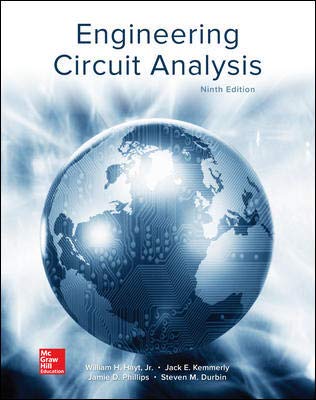
Engineering students around the world know one universal truth: circuit analysis can be tough. That’s exactly why Engineering Circuit Analysis has become one of the most trusted and widely used textbooks in electrical and electronics engineering programs. Written by renowned authors William H. Hayt Jr., Jack E. Kemmerly, and Steven M. Durbin, this book is considered a gold standard for mastering circuit fundamentals.
Praised for its clear explanations, strong problem-solving approach, and real-world relevance, this book helps students move from theory to practical understanding with confidence. Whether you’re preparing for exams, brushing up on fundamentals, or building a strong engineering foundation, this review will walk you through everything you need to know — including why it’s worth buying today.
Table of Contents
About the Book
Engineering Circuit Analysis is a core academic textbook focused on the principles of electrical circuit theory. It is commonly used in undergraduate engineering courses and serves as a reference for professionals revisiting fundamentals.
The book covers essential topics such as:
- Ohm’s Law and Kirchhoff’s Laws
- DC and AC circuit analysis
- Network theorems
- Operational amplifiers
- Transient and steady-state responses
What sets this book apart is its step-by-step analytical approach, helping readers not just memorize formulas, but truly understand how and why circuits behave the way they do.
Target audience:
- Electrical & Electronics Engineering students
- Diploma and polytechnic learners
- GATE, FE, and competitive exam aspirants
- Practicing engineers needing a refresher
It has been published in multiple editions, reflecting updates in teaching methodology and modern engineering applications.
About the Author
The book is authored by William H. Hayt Jr., a respected educator in electrical engineering, along with Jack E. Kemmerly and Steven M. Durbin. Hayt is particularly well-known for his ability to translate complex engineering concepts into understandable explanations.
Together, the authors bring decades of teaching experience from leading universities. Their credibility is reinforced by the book’s long-standing adoption across engineering institutions worldwide.
You can also find this book and reader reviews on Goodreads, which highlights its popularity among students and educators alike.
Summary / Key Takeaways
Here are the key learning outcomes readers gain from Engineering Circuit Analysis:
- Builds a strong foundation in circuit theory and electrical principles
- Teaches systematic methods for analyzing complex circuits
- Uses real-world engineering examples to reinforce concepts
- Develops problem-solving confidence through graded exercises
- Prepares students for advanced subjects like power systems and electronics
Importantly, the book avoids unnecessary fluff and focuses on concept clarity and application, which is why it remains relevant decade after decade.
What Readers Liked
Readers and students consistently highlight several strengths:
- Clear, logical explanations ideal for beginners
- Large number of worked examples and practice problems
- Excellent balance between theory and application
- Well-structured chapters that build knowledge progressively
- Useful illustrations, equations, and circuit diagrams
Many students also appreciate how the book helps them think like engineers, rather than just solving problems mechanically.
What Could Be Better
While highly regarded, a few minor points are often mentioned:
- The book is theory-heavy, which may feel intense for casual readers
- Some problems can be challenging without instructor guidance
- Digital learners may prefer more interactive or visual content
That said, these are common traits of serious engineering textbooks and not deal-breakers for motivated learners.
Why You Should Read It
If you are serious about electrical engineering fundamentals, this book is a must-read. It doesn’t just help you pass exams — it helps you understand circuits deeply, which pays off throughout your academic and professional career.
This book is especially valuable if you:
- Struggle with circuit concepts and need structured guidance
- Want a reliable reference book for multiple semesters
- Are preparing for competitive engineering exams
- Prefer learning through solved examples and logical derivations
Buy This Book
Ready to strengthen your circuit analysis skills?

About the Author